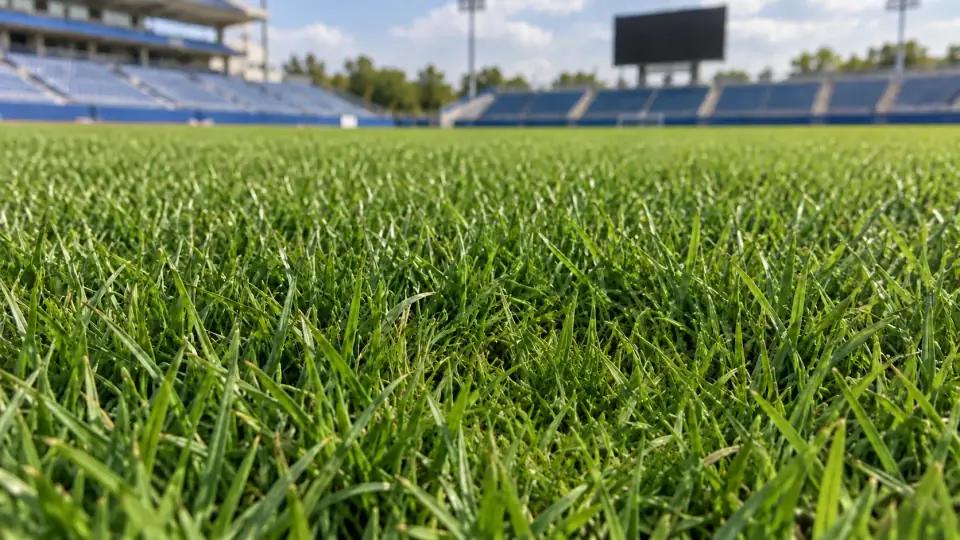
Designed to hold its height
The carrier is designed to hold height against line pressure on its own — not by a clamp, a set screw or a lock ring.
How it works
Our retrofit carrier mounts on the swing joint and is designed to take a specific rotor’s stock internals and cap in place of its original case. After that, head height is a turning adjustment made from grade — not an excavation.
Patents pending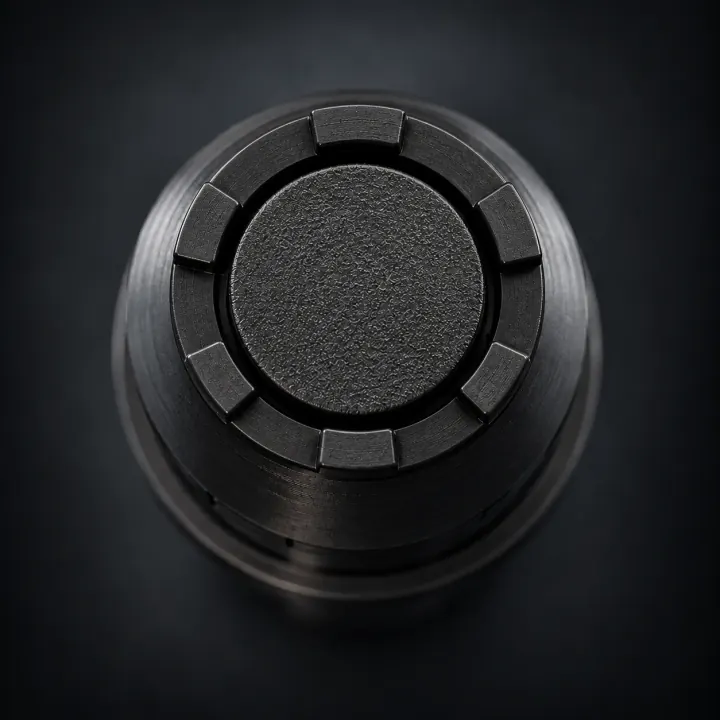 Illustrative · production parts may differ
The head has sunk below grade.
It is turned from the surface — no excavation, no turf cut.
The head is back at grade. The turf was never reopened.
Watch
Patents pendingApproximately 4 inches of total height adjustment in our first model.
It goes down, too
Patents pendingSurface hygiene is the routine work that keeps thatch and organic matter in check, and today every sprinkler head interrupts it: crews stop short of each one and start again past it.
On the rotor models the carrier is made for, the turn that raises the head is designed to lower it below the surface, too. Surface-hygiene passes can then go straight over the heads, and the turf around each one can get the same work as the rest of the field. Which passes can go over a lowered head depends on how deep the machine works: tell us what you run and we’ll give you a straight answer.
The carrier is designed so a turn at the surface takes the head below grade. No dig, no turf cut.
With the heads down, surface-hygiene machines can pass straight over them instead of going around. Which ones can depends on how deep they work.
Turn each head back up to grade before the field is watered or played. Left down, a head is a pocket in the turf.
Section views · illustrative · not to scale
The carrier is designed to hold height against line pressure on its own — not by a clamp, a set screw or a lock ring.
Height changes by turning, and every full turn is designed to move the head the same fixed increment. That makes a height change a number you can count, repeat and write down — not a judgment call made in a wet hole. That matters where the standard is tight: MLB’s minor-league ballparks allow a rotor no more than a quarter inch below the turf canopy.
Source: MLB Professional Development League Agreement, Exhibit F (Facility Standards), §8.5. MLB is a trademark of its owner; Elevation Irrigation is not affiliated with or endorsed by MLB.
Tell us which rotors you run and how your fields are used. We’ll give you a straight answer on fit — including when the answer is that it doesn’t.