
Players
Pro and college athletes plant, cut and slide on every square foot. A head kept at grade leaves no pocket and no hard edge in the playing surface.

Watch
Patents pendingRetrofit for in-ground rotors
Patents pendingYour Sprinkler, Our Housing
 and


Below the turf line
Patents pendingOur retrofit carrier, made for specific rotor models, is designed to raise and lower the head from the surface. The mechanism lives below the head; adjustment happens at grade.
See how it worksPlayer safety
Patents pendingA sprinkler head that has sunk leaves a pocket in the turf. One that sits proud is a hard edge. Either can catch a cleat, turn an ankle or trip a child who isn’t watching the ground. At grade, it is neither.
Pro and college athletes plant, cut and slide on every square foot. A head kept at grade leaves no pocket and no hard edge in the playing surface.
Parks, school fields and home lawns are where kids run flat out, rarely watching their feet. At rest, a head at grade isn’t a lip to trip over or a hole to step into.
In parks and on home lawns, a proud head is a lip for a stroller or wheelchair wheel to catch, and a sunken one is a dip. A head at grade sits flush with the surface.
6–10 sprinklers a year
That’s how many some teams report breaking by hitting heads that aren’t set at the right height. A proud head is a strike waiting to happen; at grade, the mower clears it.
A sunken head throws its water into the grass around it instead of across the field, which can leave dry spots. At grade, its spray clears the grass.
A dig-and-reset means cutting sod, shoveling and working on your knees in a wet hole, and the patch stays visible in the playing surface for weeks.
On the rotor models it is made for, the carrier is designed so that, once installed, a head that has drifted off grade can be brought back from the surface without a dig.
 Pre-release prototype · production parts may differ
Approximately 4 inches of total height adjustment in our first model.
The carrier is the housing. On the rotor models it is made for, it is designed to take the place of the rotor’s original case and hold your rotor’s own internals and cap, unmodified, so service parts stay the ones your distributor already stocks. We’ll tell you whether it fits yours.
Raise or lower the head from grade, within its travel range. Once installed, a height reset is designed to need no excavation and no turf repair.
IllustrativeThe carrier is designed to hold height on its own, without a clamp or lock ring.
IllustrativeTell us which rotors you run. We’ll help you determine whether our retrofit carrier fits your field.
Surface hygiene
Patents pendingSurface hygiene is the routine work that keeps thatch and organic matter in check. Today, crews stop short of every sprinkler head and start again past it — so the turf around each head misses the pass. In our experience, it’s often some of the wettest, poorest turf on the field.
On the rotor models it is made for, the carrier is designed so a crew can lower a head below the surface, working from grade. No dig.
With the heads lowered, surface-hygiene machines can pass straight over them instead of going around, and the turf around each head gets the same work as the rest of the field.
Turn each head back up to grade before the field is watered or played. Left down, a head is a pocket in the turf, and its spray can’t clear the grass.
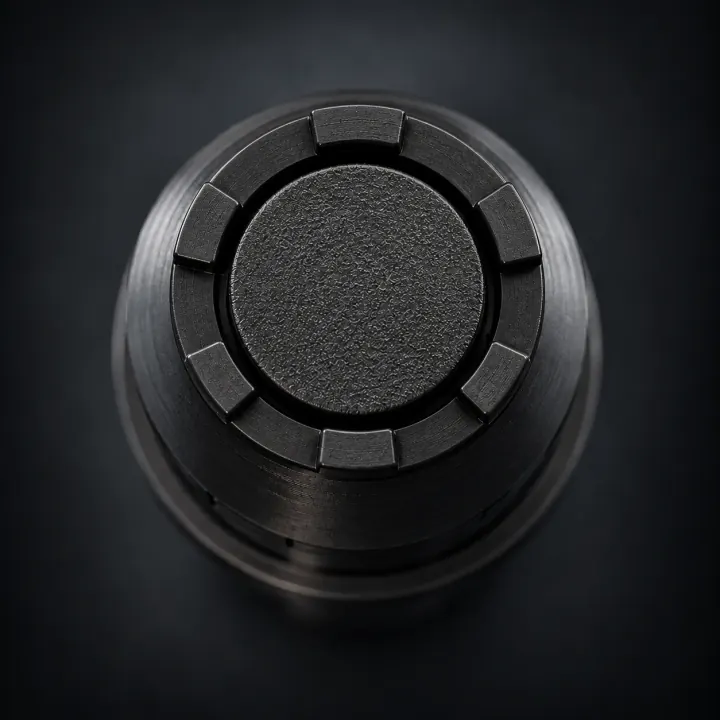 Illustrative · production parts may differ
How it works
Patents pendingOnce installed on the rotors it is made for, the carrier is designed to make a height change a turn from grade, within its travel range — not an excavation.
See how it worksGeocellular sub-bases
Patents pendingThe carrier, made for specific rotor models, is designed to sit inside a geocellular sub-base, like the unit shown here, and be adjusted from the surface. Sub-base systems differ, so tell us about your build-up and the rotors you run, and we’ll tell you whether it fits.
Ask about your sub-base Pre-release prototype · on the bench · production parts may differ
Tell us which rotors you run.


